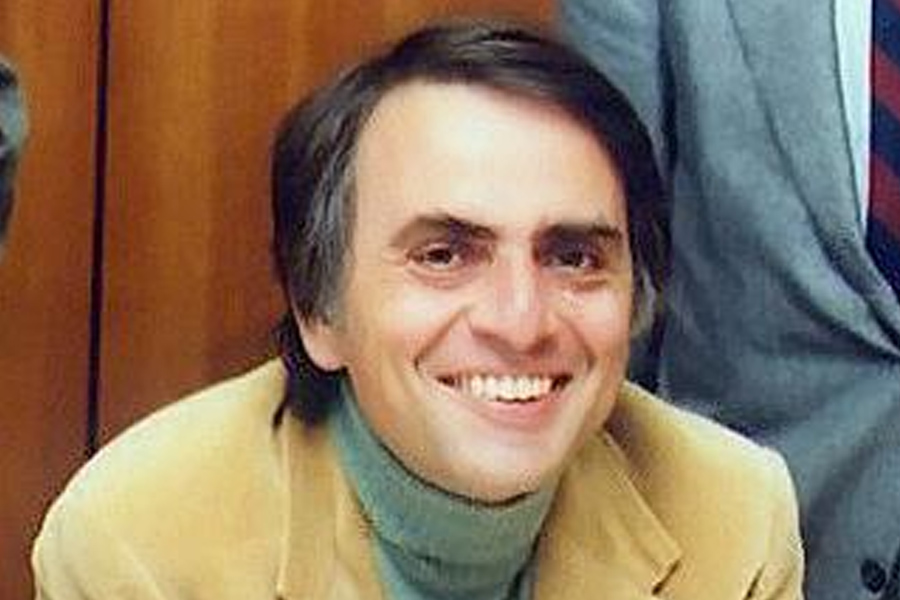
A name shaped by inheritance and invention
Jeremy Sagan occupies a rare kind of cultural space. His name echoes through science history, yet his own work lives in a different register, one measured in code, sequencing grids, and the mechanics of creative tools. That contrast is part of what makes him compelling. He is not presented as a figure who stands on a stage and asks to be watched. He is more like the person inside the machine room, listening for timing errors, tightening screws, and making sure the whole structure can carry sound without collapsing under its own complexity.
That kind of life rarely announces itself loudly. It does not need to. The quieter forms of technical work often shape the daily habits of other people more deeply than celebrity ever does. Software for musicians, especially sequencing and production tools, becomes a kind of invisible infrastructure. It is the scaffolding behind expression. Jeremy Sagan appears to belong to that tradition, where the value of a tool is measured by how naturally it disappears into the creative process.
Growing up near a bright gravitational field
A family name can be a lantern or a burden, depending on where you stand. In Jeremy Sagan’s case, it seems to have been both. Being connected to Carl Sagan and Lynn Margulis means growing up near two very strong intellectual stars. One pulled toward public imagination, the other toward the deep structure of life itself. Together they formed a kind of intellectual weather system, full of inquiry, debate, and restless curiosity.
Yet family legacy does not fully determine a person. It offers climate, not destiny. A child raised in the shadow of brilliance may spend years deciding whether to walk toward that brightness or step sideways into a more private vocation. Jeremy Sagan seems to have chosen the second path. Rather than becoming a public intellectual in the traditional sense, he moved toward building things that serve creators directly. That choice gives his story a distinct shape. It suggests discipline without theatricality, and originality without noise.
There is something almost architectural about that kind of identity. A bridge is not famous for its voice. It is admired for carrying weight. A well made tool performs the same trick. It holds pressure, creates motion, and lets others cross into new territory.
Early computing and the appeal of the handmade program
The world of early personal computing rewarded a certain kind of mind. It favored patience, experimentation, and a willingness to learn by breaking things. In that environment, a program was not just a product. It was a crafted object, something closer to a hand built instrument than a mass market appliance. Jeremy Sagan’s early public work belongs to that era, when software often reflected the personality of its maker in visible, almost tactile ways.
The Apple II years were especially important because they rewarded ingenuity over scale. Memory was small, interfaces were plain, and every useful trick mattered. That meant a developer had to think like both an engineer and a puzzle maker. A good program did not simply function. It made limited resources feel expansive. It turned constraint into rhythm.
That spirit seems to have followed Jeremy Sagan into later work. Once someone has learned to build in a spare environment, they often develop an instinct for efficiency that never leaves. They know how to reduce clutter. They know which features matter because they have already wrestled with scarcity. That often produces software with a practical elegance. Nothing flashy. Nothing wasted. Just enough structure to let creativity move.
Music software as a form of invisible composition
Music software is a curious discipline because it sits between precision and emotion. It must keep exact time while helping users make something expressive. That tension is not a flaw. It is the whole point. A sequencer is a machine for organizing possibility. It can count, repeat, arrange, and synchronize, but its true purpose is to make musical imagination usable.
Jeremy Sagan’s connection to sequencer tools places him in that demanding territory. To build software for musicians is to accept that your work will be judged not only by whether it runs, but by whether it feels right under the fingertips. Timing must be stable. Workflow must be readable. The interface has to encourage motion rather than interrupt it. A single awkward click can break the spell. A well designed path, by contrast, can feel like a hallway that opens onto a studio.
That is why music software creators often resemble instrument makers more than conventional programmers. They are not merely writing instructions for a computer. They are shaping the conditions under which someone else can hear themselves clearly. That requires empathy as much as technical skill. It also requires a tolerance for invisible labor. The best toolmakers rarely receive the loudest applause, but their work lingers in the songs and projects that pass through their hands.
The pull of product design and long term consistency
One of the most interesting things about Jeremy Sagan is the sense of continuity in his work. Many people in technology jump from field to field, following trends as the ground shifts. His public profile suggests a steadier current. The same broad concerns seem to recur over time. How do you make a system useful? How do you make it flexible without making it confusing? How do you support creativity without constraining it?
Those are product questions, but they are also philosophical questions. They ask how freedom and structure can coexist. They ask how much guidance is enough. They ask whether a tool should disappear into the background or declare its own presence. Anyone who has built software knows that these questions never fully go away. They return with each new interface, each new platform, each new user expectation.
Consistency in that world should not be mistaken for repetition. It is often a sign of deep focus. A person who returns to the same creative problem across decades is not standing still. They are refining a vocabulary. They are learning which problems are permanent and which are merely fashionable. Jeremy Sagan seems to have pursued that sort of slow mastery, where the work matures by accumulation rather than reinvention.
A private footprint in a public age
Modern culture often rewards visibility over depth. The loudest figures collect attention, while the quieter builders remain difficult to pin down. Jeremy Sagan’s presence feels aligned with the second category. He appears to have lived close to the work, not the spectacle. That can make a biography harder to compress, but it also makes it more interesting. People who remain near the making process tend to leave behind traces in software, tools, and technical communities rather than in glossy self mythology.
That relative privacy gives his story a certain dignity. It suggests someone who let the work speak first. There is no need for a polished legend when the artifacts already point in the direction of care. A developer who builds for creators leaves a different kind of signature. It is not a footprint in the sand. It is a set of well placed stones across a stream, useful long after the builder has stepped away.
The appeal of such a life lies partly in its balance. Jeremy Sagan carries a name with deep public resonance, but his own path seems rooted in practical invention. He stands at the meeting point of legacy and utility, where family history meets the craft of making things that work. That meeting point is not dramatic in the usual sense. It is quieter, steadier, and in some ways more enduring. It resembles a well tuned instrument waiting in the corner of a studio, ready to turn thought into motion the moment a hand reaches for it.
Making Container Moves Behave Like A Well Rehearsed Parade
How To Turn A Sports Room Into A Personal Hall Of Fame
The Smart Womens Wardrobe That Works Overtime