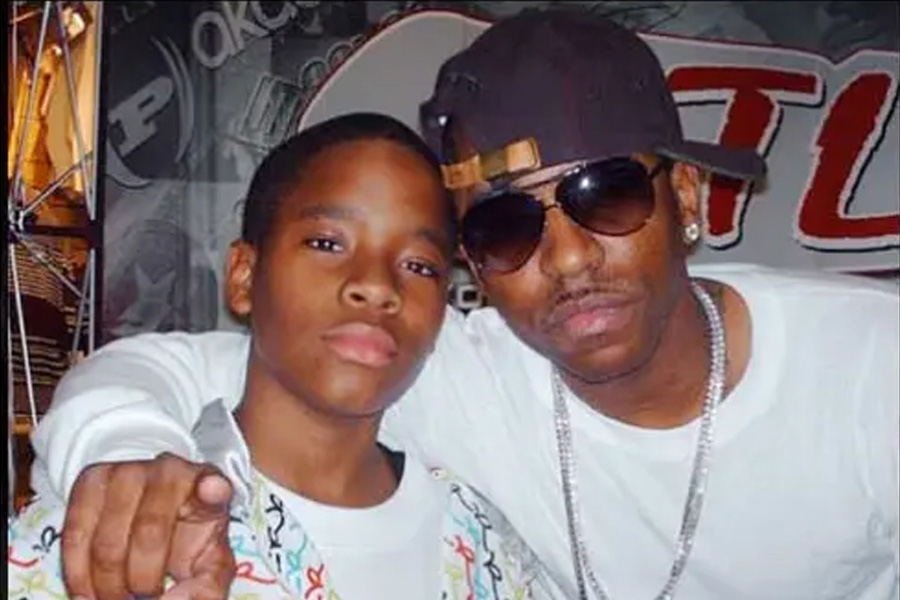
Growing up beside the music
I have always been drawn to the spaces around famous things. There is a particular hum in those margins, a low-frequency vibration that only the people who live there can feel. Ramone Malik Hill grew up in one of those margins. He was not the headline. He was the room where the music spilled out after the session ended, the calm at the center of a family that knows stages and schedules by heart.
When I imagine Ramone as a child, I do not picture him chasing fame. I picture him listening: the cadence of a producer counting off a take, the small arguments over lyric lines, the rustle of paper contracts that mean something to adults but nothing to a boy. Those sounds taught him grammar different from other kids. He learned patience, and he learned to watch how attention moves. That kind of education shapes a person. It can give them curiosity, or it can give them a hunger for a different kind of normal. For Ramone, the choice to stay mostly out of public view reads to me like a deliberate curriculum in self-definition.
Family as a compass
Family is often where identity starts and where it keeps returning. For Ramone, the family orbit seems to point to both roots and not only roots but directions. He is the eldest son in a family that has navigated public life and private loyalties. I think about how siblings who grow up around each other but under different spotlights develop invisible compacts. Older siblings often become informal custodians of memory and etiquette. I suspect Ramone is exactly that: the one who remembers birthdays, the one who holds a younger brother steady when scrutiny arrives.
There is also the presence of a public figure who once stood in the role of stepmother. People in blended families learn to rotate roles, to inhabit multiple kinds of affection. That experience can sharpen emotional intelligence. It can also make someone wary of assuming a role simply because the world expects it. When I look at the Hill family through that lens, I see choices made to preserve certain intimacies. I see Ramone moving through those choices with a care that looks intentional.
The power of choosing privacy
Privacy is not a neutral absence of data. It is a strategy. It can be armor, a canvas, or a bargaining chip. In a culture that monetizes every glance, choosing to remove oneself from the gaze is a radical act. Ramone Malik Hill’s low public profile is not a failure of visibility. It is a statement. I believe choosing privacy gave him room to try on different selves away from commentary sections and algorithmic feedback.
I have watched people carve quarters of their lives into separate rooms: public work, private relationships, creative play, and quiet routines. For some that separation is porous. For others it is fortressed. If Ramone has fortified his private rooms, he has also preserved the ability to fail and to experiment without the pressure of spectacle. That freedom is underrated.
A life made of small public moments
Public life is often measured by volume. But volume is not the only metric. Small public moments can be the contours that define a private person to the outside world. A photograph at a screening. A shared laugh in a candid image. A brief presence at a family celebration. Those gestures do not build a career, but they tell you something essential about belonging.
I think of those moments as brushstrokes in a portrait that is still being painted. Each stroke reveals a texture without completing the image. Seeing Ramone in a few public frames tells us that he steps into the light rarely but not never. He is not hiding behind a wall. He is choosing where to stand when the light comes on. That level of discretion shapes perception. It creates curiosity without granting entitlement.
Between legacy and self
Growing up in the orbit of people who helped shape a musical era creates a unique interior conflict. On one hand there is legacy. Legacy is a map drawn by others. It is a set of expectations written in songs, labels, and industry lore. On the other hand there is the desire to be legible on one’s own terms. For someone like Ramone, that tension could be a quiet engine or a source of fatigue.
I have seen people in similar positions respond in two ways. Some lean into the family story and use it as a ladder. Others slow down and build a parallel life where the family name is context and not the whole sentence. Choosing privacy can be a way of negotiating that tension. It allows a person to inherit what they want from a legacy while refusing the parts that would coopt them. If I had to guess, I would say Ramone is experimenting with a balance: accepting connection without surrendering identity.
What the gaps tell us
A life that leaves gaps is not a mystery to be solved. It is a narrative with rooms intentionally left closed. Those gaps force us to reckon with what we want to know and why. They also remind us that biography is often a collage of facts, impressions, and selective exposures. When I look at the spaces in Ramone’s public record, I see an invitation to listen rather than to consume.
Gaps also incubate projection. People fill silence with stories. They invent motives and timelines and careers for someone they do not know. That tendency is human and not always harmful. But it can obscure more than it reveals. If we approach Ramone’s gaps with humility, we can appreciate the shape of a life without trying to reconstitute it out of speculation.
FAQ
Who is Ramone Malik Hill?
I see Ramone as the eldest son in a family woven into Atlanta music culture. He is not a celebrity in the usual sense. He occupies a quiet place in a family that has had public moments. He shows up selectively, and those appearances read like choices rather than obligations.
Who are his parents?
His father is a figure known within music circles. His mother has maintained a level of privacy that keeps her mostly out of public records. I find that the dynamics of parental publicness and parental privacy can deeply affect how a child understands fame and discretion.
Was Monica part of his early life?
There was a period when Monica was present in the family story. Stepfamily dynamics like that can reshape the emotional landscape of a household. In my view, those experiences can leave a person with a nuanced sense of intimacy and publicness.
Does he have siblings?
Yes. He is part of a sibling group that includes younger brothers. Being the eldest often comes with informal responsibilities and a natural proximity to family memory. I imagine he carries that lightly but surely.
Is his career public?
Not publicly. There are no widespread professional credits attached to him. That lack does not imply inactivity. It may mean he is working in ways that do not translate easily into public records or that he prefers to develop his path in private.
Is he active on social media?
I find that he maintains a low digital profile. In an era when visibility is currency, choosing to remain off major platforms is a form of boundary setting. It limits one kind of exposure and preserves another.
Has he appeared recently in public?
He has been present at several family events and gatherings over time. Those moments are selective and often family-centered. They suggest a person who participates in public life on his own terms.
Where does he live?
His current residence is kept private. Privacy around residence is common for people who have close ties to public figures. It is a way to protect daily life from performative attention.
Is he in a relationship?
There is no public record indicating a current relationship. That absence could be intentional privacy or a simple lack of coverage. Either way, relationship status is a private matter that may or may not intersect with public interest.
How is he connected to the broader music scene?
His connection is primarily familial. He grew up around studios and conversations about music. That proximity gives him cultural fluency even if he does not occupy a public role in the industry.