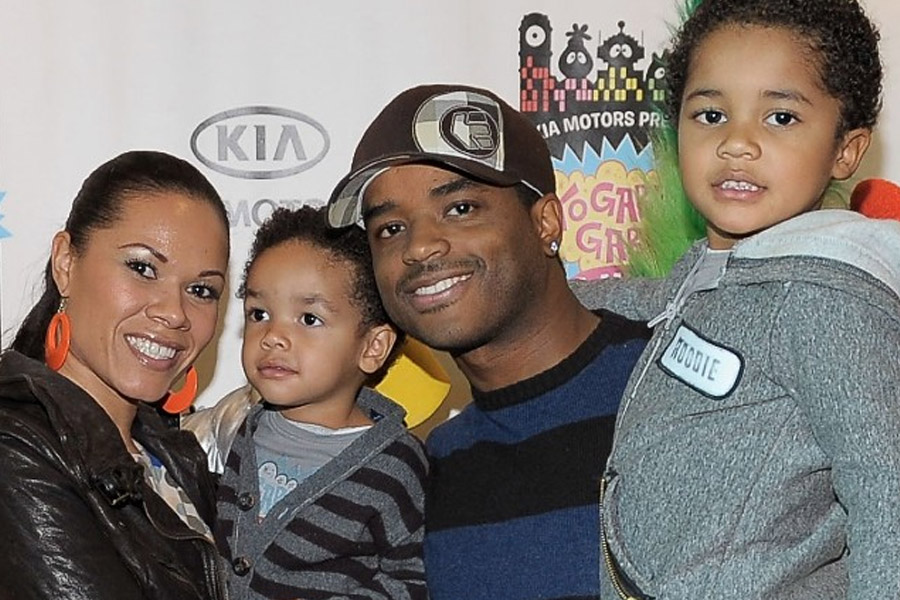
A Name Seen at the Edge of the Spotlight
I think of Zander Tate as a figure drawn in pencil rather than ink. The outline is visible, but the details stay guarded. He belongs to a family that has long lived near the bright machinery of entertainment, yet his own public identity remains intentionally soft around the edges. That is not a weakness. It is part of the design.
When a child grows up inside a recognizable family, the world often tries to turn that child into a headline before the child has had time to become a person. Zander Tate resists that pressure by simply not being overexposed. That choice matters. In a culture that often treats privacy like a missing puzzle piece, the Tate family seems to treat it like a wall worth keeping strong. I find that refreshing.
What makes Zander Tate interesting is not a stack of credits, interviews, or social media noise. It is the contrast between visibility and restraint. He is present enough to be known, but not so exposed that his childhood becomes public property. That balance gives his story a different texture. It feels less like a performance and more like a protected room in a busy house.
Growing Up in a Family Built on Craft
The Tate household sits at the intersection of performance, discipline, and legacy. His parents come from careers shaped by public expression, but the home itself appears to run on quieter fuel. I picture a place where talent is ordinary, where creativity is expected, and where the larger lesson is not fame but formation. That is a useful distinction.
Children raised in artistic families often inherit more than appearance or name recognition. They inherit a vocabulary. They learn how rehearsal feels, how schedules compress, how attention works, and how image can be both useful and dangerous. Zander Tate likely grew up near all of that without being asked to carry the full weight of it. That matters because childhood is not supposed to be a résumé.
The family’s public identity suggests a deliberate boundary between work and home. That boundary is its own kind of inheritance. It says that a child can belong to a famous circle without being consumed by it. It says that family life can remain a living thing instead of becoming content. In my view, that is one of the strongest themes around Zander Tate: the idea that privacy can be an active choice, not just an accident.
The Power of Being Seen Sparingly
There is a strange power in limited visibility. The less a child is turned into a public object, the more room there is for ordinary growth. School, friendships, mistakes, hobbies, and shifting interests can unfold without an audience leaning over the fence. For someone like Zander Tate, that may be the real story. Not what the public knows, but what the public does not need to know.
This kind of low profile can be misunderstood. People often assume that silence means absence, but that is not true. Silence can mean protection. It can mean that a family has decided the world does not need every detail to appreciate the shape of the life. I see that as a form of discipline. It is a fence with a purpose.
There is also a social lesson here. We live in a time when people are encouraged to reveal themselves early and often, as if visibility alone proves value. Zander Tate’s limited presence pushes against that idea. His story reminds me that identity can mature offstage. A person does not need to be fully narrated by strangers to be real.
A Family Story Larger Than One Child
Zander Tate does not exist in isolation. He is part of a wider family structure that carries its own rhythm. That broader frame matters because it changes the way I read his public footprint. He is one thread in a larger fabric, not the whole cloth.
The family’s shape suggests continuity across generations. There is a sense of lineage, of names passing forward, of lessons repeating with new emphasis. In celebrity culture, families are often flattened into branding. Here, the better reading is more human. The family seems to move with intention, preserving what should stay private while allowing the occasional public glimpse to stand in for a fuller story.
That approach gives the family a kind of gravity. It says that success does not have to spill everywhere. It can stay rooted. It can be carried without being displayed at every turn. That is a subtle but meaningful distinction, and it helps explain why Zander Tate attracts curiosity even without a public career.
Why Privacy Can Be a Form of Strength
I do not think privacy is a retreat from life. I think it can be a way of defending the conditions needed for life to unfold. For someone like Zander Tate, privacy may be the difference between being shaped by family and being shaped by public expectation. That is a crucial difference.
A child in a recognizable household can easily become a projection screen. Some people will imagine future careers. Others will expect inherited charisma, inherited talent, inherited purpose. But a child is not a prophecy. A child is a person in process. The restraint around Zander Tate helps preserve that process.
It also reflects something larger about parenting in public. Families with visibility often have to decide whether their children will grow up as stories or as people. The Tate family appears to have chosen people. That choice gives the public less material, yes, but it gives the child more room. I respect that tradeoff.
What Zander Tate Represents Beyond Celebrity Curiosity
Zander Tate represents a kind of modern tension. He sits at the border of public fascination and personal privacy. That border is where many children of famous families live, whether the world notices or not. Some are pushed into view too early. Some disappear entirely. Zander Tate seems to occupy a middle space, where enough is known to satisfy basic curiosity, but not enough to strip away individuality.
That middle space is worth paying attention to because it tells us something about how fame is changing. People are increasingly aware that constant exposure can flatten a life. It can turn a child into a profile instead of a person. Zander Tate’s limited public identity suggests another model, one where family reputation exists without swallowing childhood whole.
I also think his story resonates because it leaves room for possibility. He may choose a public life later, or he may not. He may step into an artistic lane, a completely different field, or a life that never asks for an audience. The point is that the choice remains open. That openness is valuable in itself. It is like a door left unlocked in a house where most doors are nailed shut.
FAQ
Who is Zander Tate?
Zander Tate is publicly known as the son of actor Larenz Tate and Tomasina Parrott. His public presence is limited, and he is mostly referenced in connection with his family.
Why is there so little public information about Zander Tate?
The family appears to keep personal details private, especially regarding the children. That keeps Zander Tate away from the constant exposure that often follows celebrity families.
Does Zander Tate have a public career?
There is no widely confirmed public career or professional credit associated with Zander Tate at this time. Most references to him remain family related.
Is Zander Tate active on social media?
There is no widely verified public social media presence clearly tied to Zander Tate.
How many siblings does Zander Tate have?
He is described as one of four sons in the family. The public record varies slightly on the spelling of names, but the family is consistently described as having four boys.
What makes Zander Tate noteworthy?
He is noteworthy because he sits inside a recognizable entertainment family while remaining largely outside the spotlight himself. That combination creates a rare kind of public curiosity.
Are Zander Tate’s parents both connected to entertainment?
Yes. His father is Larenz Tate, an actor, and his mother is Tomasina Parrott, who has worked as an actress, dancer, and choreographer.
Why do people search for Zander Tate?
People are often curious about the children of public figures, especially when the family keeps those children out of the spotlight. Zander Tate draws interest because he is known, but only in carefully limited ways.