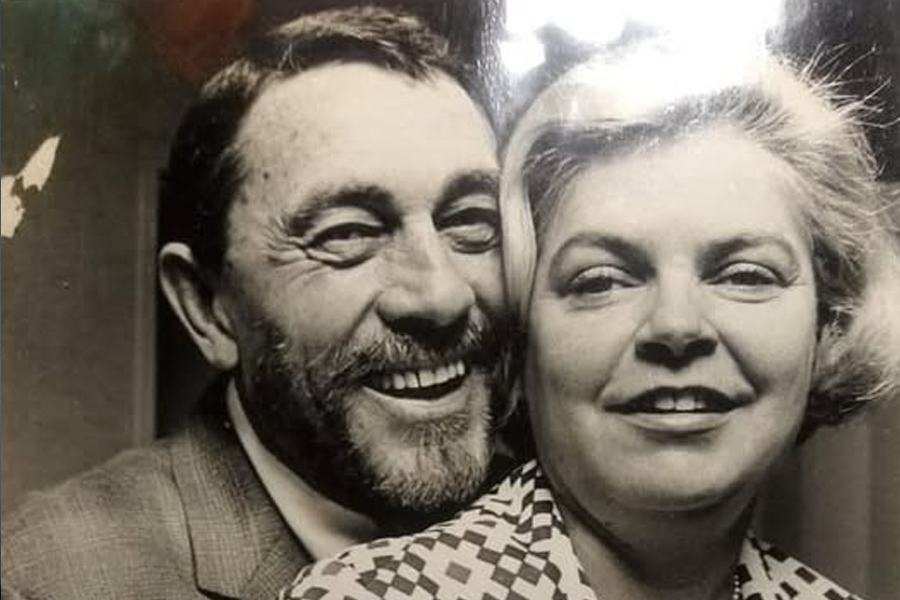
A life shaped by movement, memory, and steady devotion
Torrie Ahern Connelly moved through the world with the kind of presence that does not demand a spotlight yet somehow changes the whole room. Her story belongs to the American West, to family kitchens, rodeo sidelines, and the long, practical work of holding people together. She was born in 1929 and grew up in Utah, in a landscape where distance can be vast and loyalties even larger. That setting matters, because it helps explain the shape of her character: open, resilient, and built for community.
What stands out most about Torrie Ahern Connelly is not celebrity in the usual sense. It is influence without performance. She was not the person onstage or in the arena, but she was the person who made the gathering possible. Some people light a fire and leave it to burn. Torrie kept tending the coals.
Utah roots and a family culture of belonging
Torrie’s early years were rooted in Salt Lake City and the surrounding Utah world, a place where family ties could feel as binding as braided rope. She grew up among four sisters, and in a household like that, there is little room for isolation. You learn negotiation early. You learn how to share attention, share chores, and share the emotional weather of the day. That sort of upbringing can sharpen a person’s instincts. It can also teach a lasting kind of warmth.
Her mother’s later remarriage and the layered family structure that followed seem to have added another lesson to Torrie’s life: stability is not the same thing as simplicity. Families grow through change. They adapt, fold in new chapters, and keep going. Torrie carried that understanding into adulthood. She knew how to welcome people without making them feel like guests. She knew how to create continuity in a life that changed shape more than once.
Even in the plain facts of her early life, there is a hint of the temperament that would define her later years. She was said to be outgoing, quick to connect, and comfortable with a wide circle of people. That kind of ease is not accidental. It is often the product of a childhood spent listening closely and learning how to read a room before speaking into it.
Marriage, motherhood, and the steady strength of ordinary days
Torrie married young, as many women of her generation did, but her life soon developed beyond the simple outline of a spouse and home. She became a mother to two children, William and Danelle, and that role appears to have been central to her identity. Motherhood in her era often meant an endless rotation of practical responsibilities, but in Torrie’s case it also seems to have carried an emotional architecture. She was building a home not just out of furniture and routines, but out of reassurance.
Then came loss. Widowhood can split a life into before and after with brutal clarity. Torrie had to carry on after the death of her first husband, and she did so with the kind of restraint that often conceals deeper courage. There is something formidable in a person who continues to parent, continue to welcome, continue to participate in life after grief has visited. Grief can be a flood. Torrie seems to have answered it by becoming a harbor.
The years after her first marriage were not blank space. They were active years, years of responsibility and friendship, years in which she kept close to the people who mattered and kept faith with the work of everyday life. That is often where a life is truly tested. Not in dramatic public moments, but in the accumulation of small choices. Torrie’s story suggests a woman who met those choices with grace.
The rodeo world and the gift of being indispensable
One of the most distinctive parts of Torrie Ahern Connelly’s life was her long connection to the rodeo community. She was not a competitor, but that does not make her role secondary. In many ways, she was indispensable. Rodeo life has always carried a mixture of grit, movement, and fellowship. It is a world of dust, travel, competition, and temporary homes. People come together fast and often leave just as quickly. In such a setting, someone who creates warmth and continuity becomes a kind of anchor.
Torrie was that anchor. She welcomed people, introduced them, organized gatherings, and helped turn passing acquaintances into lasting connections. Her presence gave social shape to a culture that might otherwise have felt scattered by the road. If rodeo life was a moving train, Torrie was part of the hand that kept the rails aligned.
This role can be easy to overlook because it does not produce trophies or headlines. Yet communities do not survive on spectacle alone. They survive on the people who remember birthdays, ask after families, and know how to make strangers feel included. Torrie seems to have understood this instinctively. Her influence was relational, and that made it durable.
A second marriage and a life in the public orbit
In 1966, Torrie married Ken Curtis, the actor and singer beloved by audiences for his role as Festus Haggen. The marriage linked her even more visibly to the public world, but she remained herself. She was not absorbed by fame. Instead, she moved alongside it with composure. In a life attached to entertainment circles, there can be pressure to become a character. Torrie did not seem interested in that. She remained a real person first.
The marriage also blended families, which requires a particular emotional intelligence. Blended families are not assembled by sentiment alone. They require patience, tact, and the willingness to create shared customs without erasing old ones. Torrie appears to have approached that task with quiet competence. She understood how to make a household feel broad enough for everyone in it. That is a rare skill, and an underrated one.
Her years with Ken Curtis also deepened her place in the public imagination, though indirectly. Fans who knew him also knew the steadiness behind him. Torrie became part of the atmosphere around a beloved figure, part of the human support system that often goes unseen. There is dignity in that role. It is the dignity of the backstage lamp that keeps the stage visible.
Later years, remembrance, and the shape of a legacy
After Ken Curtis died in 1991, Torrie entered another chapter of widowhood. By then she had already lived enough life to understand how grief and loyalty can coexist. She remained in Fresno and stayed connected to family and friends. Her later years suggest a woman who did not retreat from life after loss. Instead, she kept participating, kept caring, kept showing up.
When she died in 1997, people responded in the way they do when a life has been quietly significant. There were services, memorial gatherings, and donations encouraged to causes that reflected compassion and concern for others. That choice of remembrance feels fitting. It points to the practical kindness that seems to have defined her. Animal welfare and hospice care both speak to the same instinct: protect what is vulnerable, ease what is difficult, and do not turn away from tenderness.
Torrie Ahern Connelly left behind more than dates, marriages, and family connections. She left a pattern of how to live with grace inside ordinary responsibility. She left proof that a person can be deeply woven into the lives of others without needing to dominate them. Her story reads like the work of a steady hand on a lantern, keeping the flame upright in the wind.
Living Well With A European Golden Retriever
Your First Virtual Doctor Visit Without The Digital Drama
Building A Va Disability Claim That Survives A Close Review